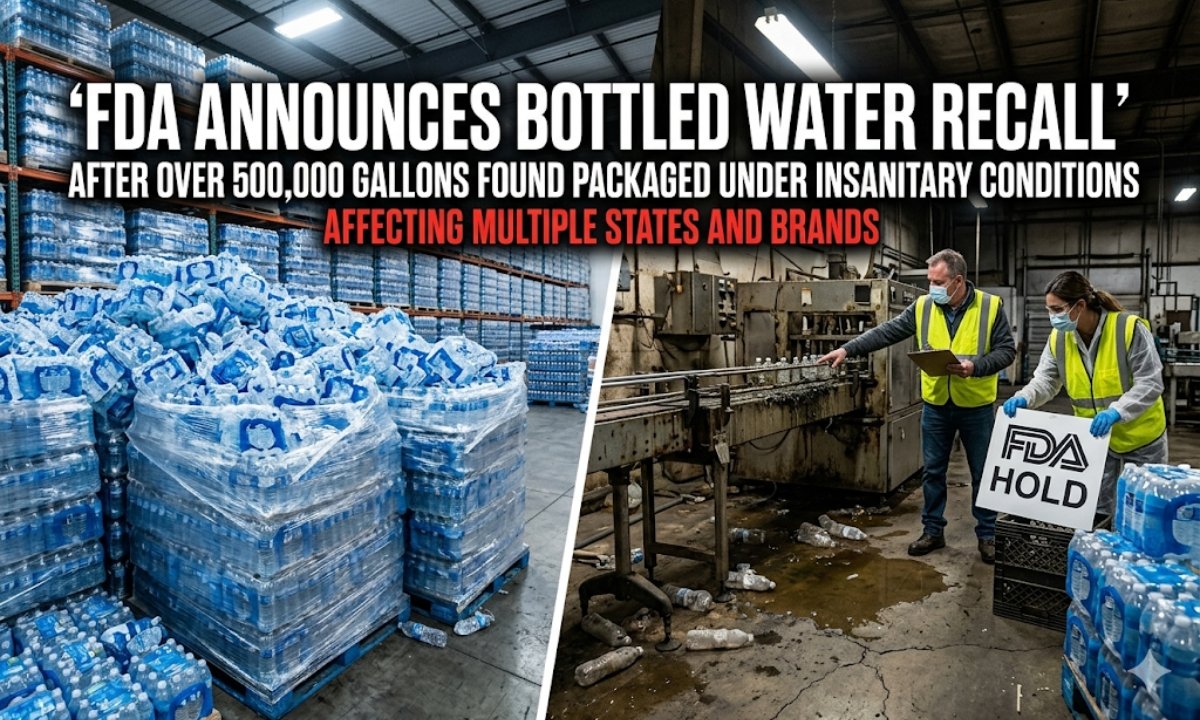
The consumers have been caught in grip by a massive recall of more than 500, 000 gallons of bottled water after FDA showed that bottling was undertaken under unsanitary conditions. The move highlights the fact that the commercial safety of basic products that we now rely on to quench our thirst is still unknown, and that families and companies are racing to label-read with concerns over contamination.
What Sparked the Recall
In this case, the FDA intervened after the inspectors exposed very serious laxities at one of their bottling plants. Water was put in a condition that supported growth of bacteria. The indications were of poor sanitation such as improper care given to equipment and surfaces that came into contact with pests and molds. The conditions may permit the entry of pathogenic organisms such as the E.coli or other bacteria to the water system, particularly affecting the children, the elderly, and immunocompromised individuals. The agency responded promptly to thwart diseases by advising a Class I recall, the most severe category, because the likelihood of potential negative health outcomes was high.
Contaminated water causes serious health consequences that put people at risk.
Consumption of water that is bottled under this condition may cause gastro intestinal diseases, on the mild side, accompanied by stomach upsets and on the severe end, dehydration or infections. Pathogens multiply well in wet and unsanitic environments and even the slight traces might increase in the number after intake. Outbreaks due to similar occurrences have been experienced in the past, which makes regulation oversight important. Health authorities recommend that any suspect water should be boiled or thrown away as a measure to prevent the threats.
What the ads do or do not do to the Consumers and Industry.
This is an immediate recall that involves several brands that are sold in the country, making supermarkets withdraw the goods off shelves and refund customers. The greatest inconvenience is on consumers buying in bulk to attend an event or to store their goods but the company might end up making a loss worth hundreds of millions of dollars in revenue and clean up operations.
| Aspect | Details |
|---|---|
| Volume Recalled | 500,000+ gallons |
| Affected Brands | Varied (specifics on FDA site) |
| Distribution | Nationwide, major retailers |
| Recall Class | Class I (high health risk) |
| Consumer Action | Return for refund or discard |
The event characterizes the larger industry issues, such as tradeoff between cost reduction and safety.
Safe hydration choices: lessons learnt.
To be on the safe side in the future, you should always check the recall notices via the FDA, or an application such as the FDA Recall app, use water whose source is well known and possesses the third-party testing certification, and you can even invest in a certified home filtration system tested by NSF International. The incident is a wakeup call to manufacturers to think of stringent sanitation measures, including periodic testing of microbes and training of workers. Being a knowledgeable person will enable you to make safer decisions in your every day life.
Hindsight: Further Enforcement.
In response, regulators can intensify the inspections, which can lead to the introduction of the mandatory real-time monitoring technology to bottling plants. Fines would be even higher, and it will drive the industry toward the possibility of such innovations as automated sanitation robots. This to consumers supports the superiority of the variety of hydration which includes the tap water which is treated to international standards and the reusable bottles with the filtered sources as well.
FAQs
Q1:So what about purchased recalled water?
See the list of FDA recall, cease using it and refund it.
Q2:What percentage of bottled water recalls occurs?
They are usually in a few events in a year and this is usually as a result of sanitation or labelling problems.
Q3: Is tap water safer right now?
Typically yes, because it is under intense local regulation whereby they test it regularly.