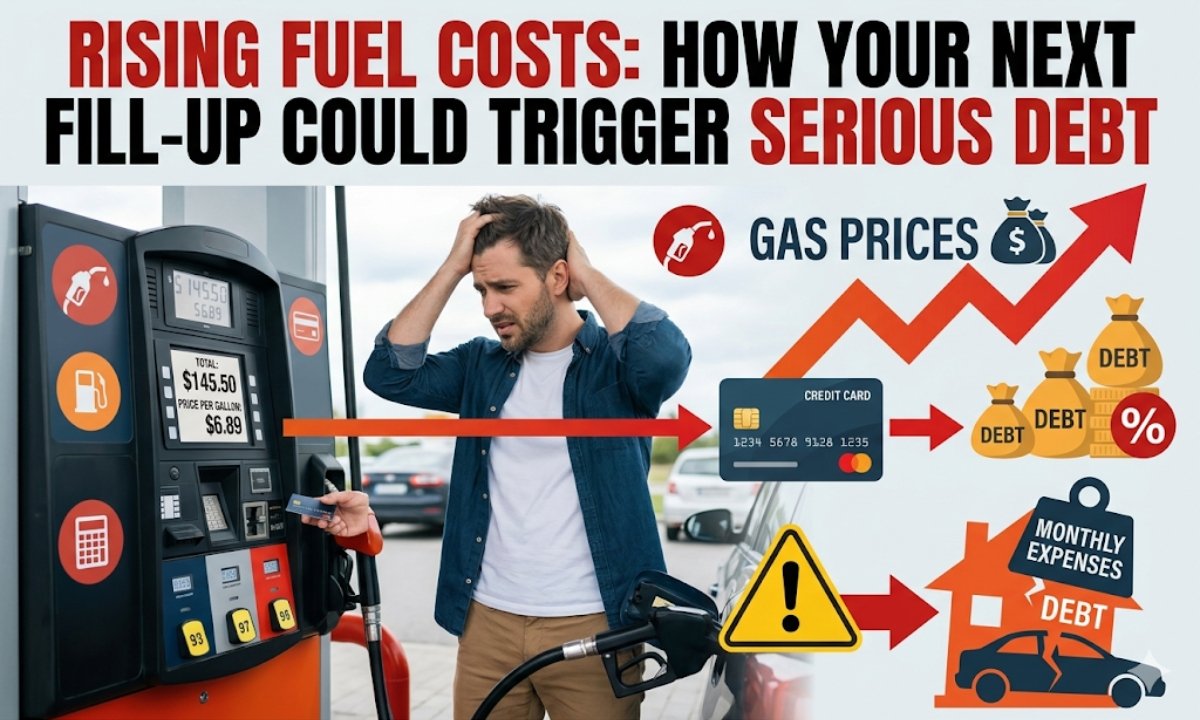
Gas prices are steadily rising, and to the average driver filling the tank is not such a reluctant event as much like a punch in the pocket. Early 2026 U.S. gasoline prices were averaging about $4.20 per gallon, up 15% over the past year due to the presence of geopolitical strife in the Middle East and supply chain hiccups by way of extreme weather. Chandigarh petrol in India has recently propelled beyond ₹105 per liter and this is making city commuters suffer. According to experts at the International Energy Agency, nothing will help stop the costs increasing by another 20 per cent by summer. One more fill-up can push the budgeting of a household which is already stretched by inflation into borrowing and increase the credit card card debt.
The actual threat is the spread of the expenses across the everyday lives. Imagine the average family: mom commutes 40 miles each way to work and dad commutes with her, and the children must be taken to soccer training. That on top of existing fuel costs, which further increases by $50-70 a week; money that could otherwise be spent on groceries or emergency fund. This is termed by behavioral economists as fuel poverty where escalating prices result in difficult decisions such as foregoing car maintenance to save money only to later incur a repairs bill in the tune of 2000. Even recent data released by the Federal Reserve reflects that a one-month increase in fuel prices causes 30 percent of drivers to enter the savings or high-interest loans. Leaving it unattended makes the following gas fill-up the matchstick of a debt inferno.
Fuel costs do not stand in their own right, but they only add to the money strains. With prices soaring, a number can look to credit cards charging an average of 22per cent in 2026 making a 100 fill-up cost 130 after one year of minimum payment. Add that with unpaid bills in other places and you are putting in late fees and collection calls. In 2025, a Consumer Financial Protection Bureau report discovered that forty percent of low-income drivers had gotten into debt correction cycles following prolonged price growths where the average balance escalated to $5,000 in 6 months. It is a gambling circle where the more debt one has, the less money they have to spend on wise habits such as running errands, which keeps the fuel expense and fuel costs significant. The least prepared to manage the trap are the gig workers, rural inhabitants and single parents who cannot afford cars but have no good alternative transportation methods. In such regions as Chandigarh where the two-wheeler is the main thing but the gas is nominal, families can say that they might reduce their healthcare or education so that the tank is full. The trap is; if you spend a tenth of your earnings on fuel, i.e., the limit of burdened households according to the United States Department of Transportation, being in debt is unavoidable in the absence of a plan.
The Numbers Muncher financially The influence of fuel on household budgets.
To be able to understand the size, take this example of an average household in the United States with 1,000 miles a month transportation of fuel expenditure (the same tendency may be observed on the international scale when adjusted to local prices):
| Household Type | Miles Driven/Month | Avg. Price/Gallon (2026) | Monthly Fuel Cost | % of Median Income |
|---|---|---|---|---|
| Urban Single | 800 | $4.20 | $112 | 2.1% |
| Suburban Family | 1,200 | $4.20 | $168 | 3.2% |
| Rural Commuter | 1,500 | $4.50 (higher rural rates) | $225 | 4.3% |
| Gig Worker | 2,000 | $4.20 | $280 | 5.3% |
Three -Year-old data modified by EIA and BSL reports (Jan 2026). In the case of Indian setting such as Chandigarh, multiply with (approximately) 2.5x liter prices -linearizing family expenditures by pushing family expenses to 5-7 000 percent of income. The table demonstrates why debt must creep in: simple increases drive vulnerable groups to the brink and particularly so when wages are not going up.
Breaking Free: Intelligent Moves to escape the Debt Bullet.
You do not need to accept this destiny passively and there are measures that can ensure your money is not lost. The first step is to log all miles on apps such as Fuelly or GasBuddy to identify waste, and users can always save 10-15% of bills by doing this. Change to high-efficiency practices: have tires inflated to the right level (increases MPG by 3 to 5 per cent), top all highways using cruise control and decrease trips. To win in the long term, use hybrids or EVs: the tax credit of up to 7,500 dollars in the U.S. is sufficient, and the subsidies provided by the FAME
by FAME III in India amount to subsidies of up to 1.5 lakh on two-wheelers. Create a buffer: seek to store 3 to 6 months of fuel bill in a high-yield savings account (4.5 the per cent rates in 2026). Others to consider include carpooling apps (such as Waze Carpool) or benefits proposed by employers, which reduces expenses by 50 per cent during pilot projects. When Debt is already creeping, it is better use the debt snowball approach, to pay off high-interest rates first, start off small wins build momentum. At such times, local gurus, such as those in the consumer forums in Chandigarh, suggest that one buys fuel in bulk through loyalty programs. These are not tricks, financial experts all over the world testify that this will take back the control.
Long term Expectancy and Policy changes.
In the future the solution may lie in policy change. The reduction in OPEC+ is slowing down and U.S strategic reserve has the potential to saturate the market in case prices fall to $5. Repeated pushes toward renewable include the European mandate of 30 per cent of all vehicles being EV as of 2030, which will stabilize globally, but allow years of hiccups in the transition. Be the first to know through trustworthy channels such as the eia dashboard, vote with your money: fuel-efficient technology and promote a superior transport system. Finally, you need not pre-write your next fill-up taking the form of debt death. Prepare information, habits, and sight and you will sail through such increasing costs like a guru.
FAQs
Q1: Increase in price of fuel in 2026?
Forecast 10 20 percent increases in most parts, according to IEA projections, attributed to supply problems.
Q2: How can fuel expenses be reduced the quickest?
Measuring mileage and bundling errands-immediately increases 10- 20 per cent.
Q3: Should I switch to an EV now?
Yes, with 10,000 + miles/annum; incentives pay back in less than 3 years.