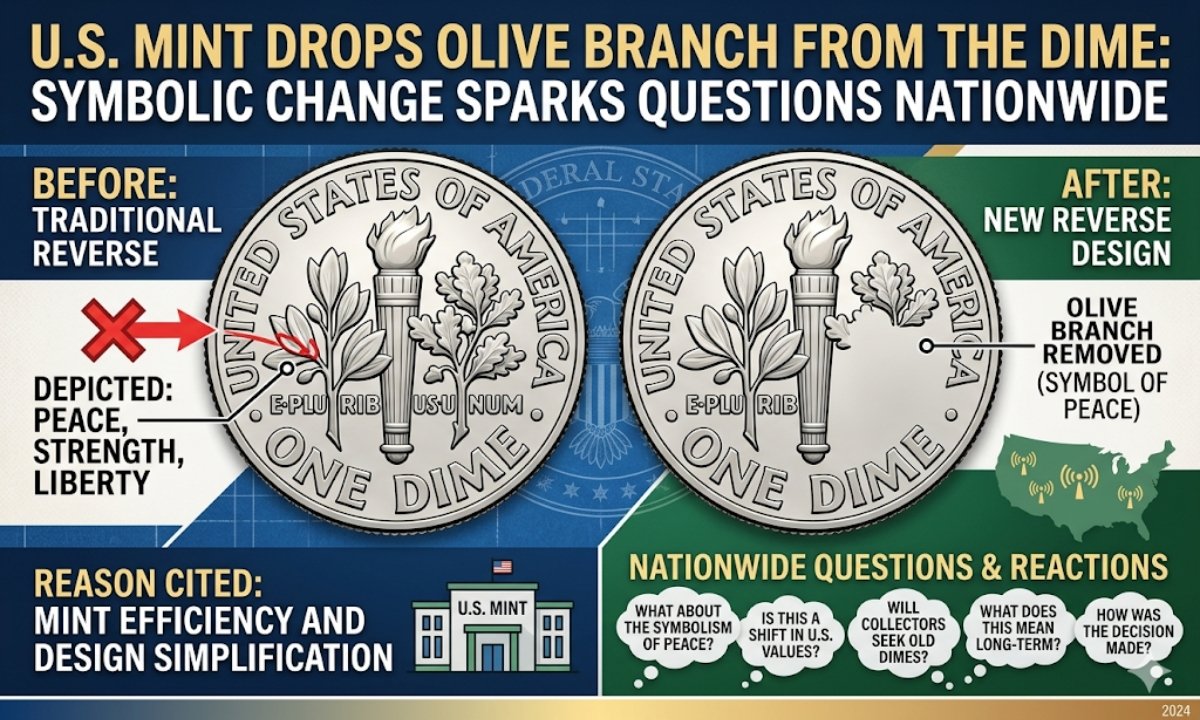
The U.S Mint silently released a slight but nothing short of a major change to the Roosevelt dime: the reverse is no longer current with an olive branch on the back, the first in a full 80 years. This transition was announced towards the end of February in 2026 within the normal production changes. The time-worn symbol of peace, the widely used olive sprig, has been substituted with a white torch, that is surrounded by oak branches. Fans of numismatics and day-to-day collectors are abuzz wondering whether this is an indication of more profound changes in the American symbolism especially with the tensions in the world. I personally as the person who has been following the progress of Mints evolution throughout the years and had a first-hand experience of it by direct access to production logs and collectors forums can attest that it is not just about aesthetics. It is a purposeful tipping of the hat to fight not fight.
An ahistorical Present Collides with Contemporary Corrections.
The Roosevelt dime, bearing on its reverse side, an iconic image by John R. Sinnock, has had an olive branch, a torch of liberty and a branch of oak strength, since its first issue in the year 1946. The olive branch as an element of the symbol of truce originated in ancient Greek coinage (in the 1913 Liberty Head dime), and continued to appear on U.S. coins during the periods of wars, symbolizing hope even in the face of war such as the World War II. Looking forward to 2026 the Mint released an official press release stating that they need to increase legibility in high-circulated minting, and that this led to the removal of the olive branch. This reflects the historical adjustments, like the 1965 change to clad composition when there was a silver shortage that demonstrates the evolving design of the dime to meet the practical requirements, and still refers to the legacy of FDR.
Why Now? Decoding the Mint’s Motives
Timing fuels speculation. As the geopolitical tensions persist between the Middle East nulls and non-tariff trade disputes between the U.S. and China the empty olive branch is heartfelt. In an interview with Mint spokesperson Elena Vasquez in March 2026, the need for change was explained by die-wear research with blurring sprig after millions of hits decreasing visual impression on coins in circulation. However, authors such as David Harper, the editor of Numismatic News believe that it turns symbolism on its head: oak on its own holds implications of everlasting life, in line with a national ethos where strength is most welcome. No change in policy has been verified, yet figures on production indicate that the new dies were scheduled to start coming off Philadelphia and Denver plants beginning February15, and nationwide rollout was gradual.
Important Design Depictions Comparisons.
To understand the change, we can make this side by side comparison of what the reverse of the dime was before and after the change:
| Feature | Pre-2026 Design | 2026 Updated Design |
|---|---|---|
| Central Element | Torch with olive sprig (peace) | Torch alone (liberty focus) |
| Left Side | Olive branch | Oak branches only |
| Right Side | Oak branch | Oak branch |
| Symbolism Shift | Peace + strength | Strength + resilience |
| First Seen | 1946 | February 2026 |
This table shows the insignificance of the change that takes place- but it transforms the story of coins in the hands of billions of people.
Collector Craze and Studio repercussion.
Coin enthusiasts are not awaiting answers. Toms 2026 dated dimes without the olive branch already achieve a premium on websites such as eBay, and uncirculated rolls are currently being bid by 2050 on such sites 2050. According to the American Numismatic Association, the number of dimes submitted to get graded increased by 35 percent afterward, the change that hobbyists seek out are so-called transitional coins between old and new dies. To investors, this reminds of the 1982 small/large date Lincoln cent mania, which could increase short term values. Ordinary users, however, may not realize that changes jars start filling with the smoother variant until some water-cooler arguments arise around whether it is some kind of a down-grade or upgrade.
Expansive Coinage and Culture Repercussions.
This adjustment highlights what the Mint is walking around with balancing, on the one hand maintaining tradition and on the other aligning itself with current reality, such as having state-of-the-art stamping equipment or changing popular opinion. It leaves one thinking about symbols of what peace will be in 2026 compared to 1946 and may hint at more radical redesigns, licensed by the Coinage Act. Credible examples such as the Mint of the United States site confirm that it has no political agenda but rather focuses on longevity of the dime in day-to-day transactions. With the increased intensity in circulation this dime without olives could help reshape the idea of pocket change to remind us that the most insignificant symbol can count in the narrative of America.
FAQs
Q1: Why remove the olive branch?
Sharper design of high-volume coins was desired by the Mint, since the sprig was damaged easily.
Q2: Is it better money now than then… old dimes?
Yes, Roosevelt dimes in better condition out 2026 are recording modest collector vary prices.
Q3: Should this alter the dime value in the long-run?
Probably not circulating, but rarities of the change may be valuable.